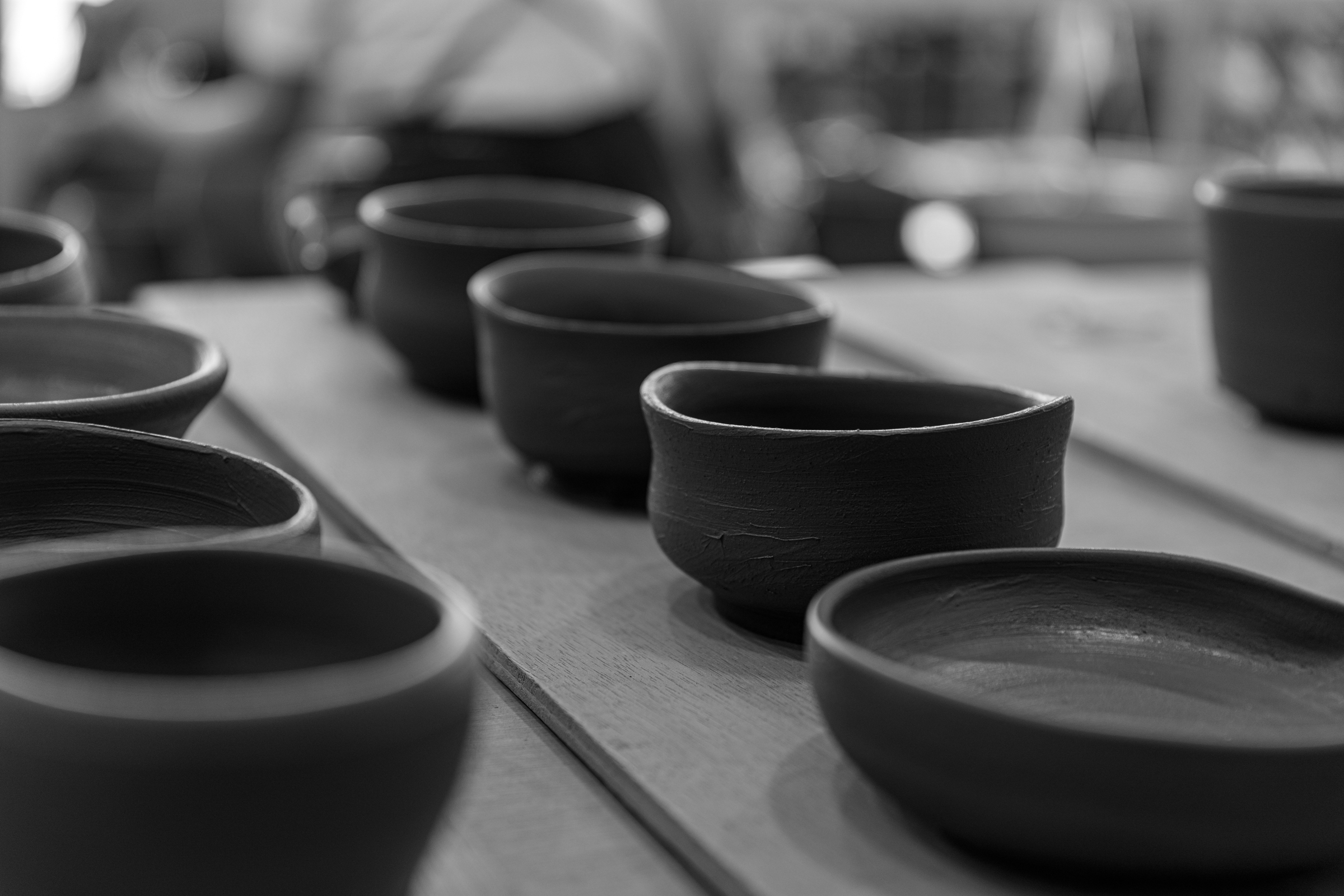
The Story Behind Japanese Craft
Craft is not only made by hands.
It is shaped by stories.
Introduction
When people encounter traditional Japanese craft for the first time, they often notice the quality of the work. The balance of a ceramic vessel. The texture of handwoven fabric. The precision of a wooden joint.
Yet what makes these objects meaningful is often invisible.
Behind every piece lies a story — a story of people, place, materials, and generations of accumulated knowledge.
To understand Japanese craft is to look beyond the object itself.
More Than Technique
Traditional craftsmanship is often associated with technical skill.
Skill is certainly important. Years of practice are required to master tools, materials, and processes.
But technique alone does not explain why a handmade object feels different.
Craftsmanship also reflects judgment, patience, and the ability to respond to materials as they change. It is a conversation between maker and material rather than a process of simple control.
This relationship creates objects that feel personal, alive, and deeply connected to their origins.
The Importance of Place
Many traditional crafts developed in specific regions for a reason.
Local clay shaped pottery traditions. Forests influenced woodworking practices. Rivers, minerals, climate, and geography all contributed to the development of distinctive techniques and aesthetics.
Even today, many workshops remain closely connected to their surroundings.
To visit a workshop is often to understand the landscape that helped create the craft itself.
Place is not simply a backdrop. It is part of the story.
Knowledge Passed Through Generations
Some knowledge can be written in books.
Much of craftsmanship cannot.
The subtle pressure of a hand. The sound of a tool cutting correctly. The moment a kiln reaches the right condition. These details are often learned through observation, repetition, and direct experience.
For centuries, knowledge moved from one generation to the next through apprenticeship and daily practice.
Every workshop carries traces of those who came before.
The survival of craft depends not only on preserving objects, but on preserving the ability to create them.
Why Stories Matter
In a world of mass production, it is easy to focus only on products.
Craft invites us to think differently.
The story behind an object adds meaning to ownership. Understanding who made something, where it came from, and why it was created allows us to build a deeper connection with it.
Stories transform objects into experiences.
They remind us that craftsmanship is ultimately about people.
Closing
Japanese craft is not defined only by what it produces.
It is defined by the people who continue to practice it, the places that shape it, and the stories that connect the past with the future.
To appreciate craft fully is to appreciate the human stories behind every piece.